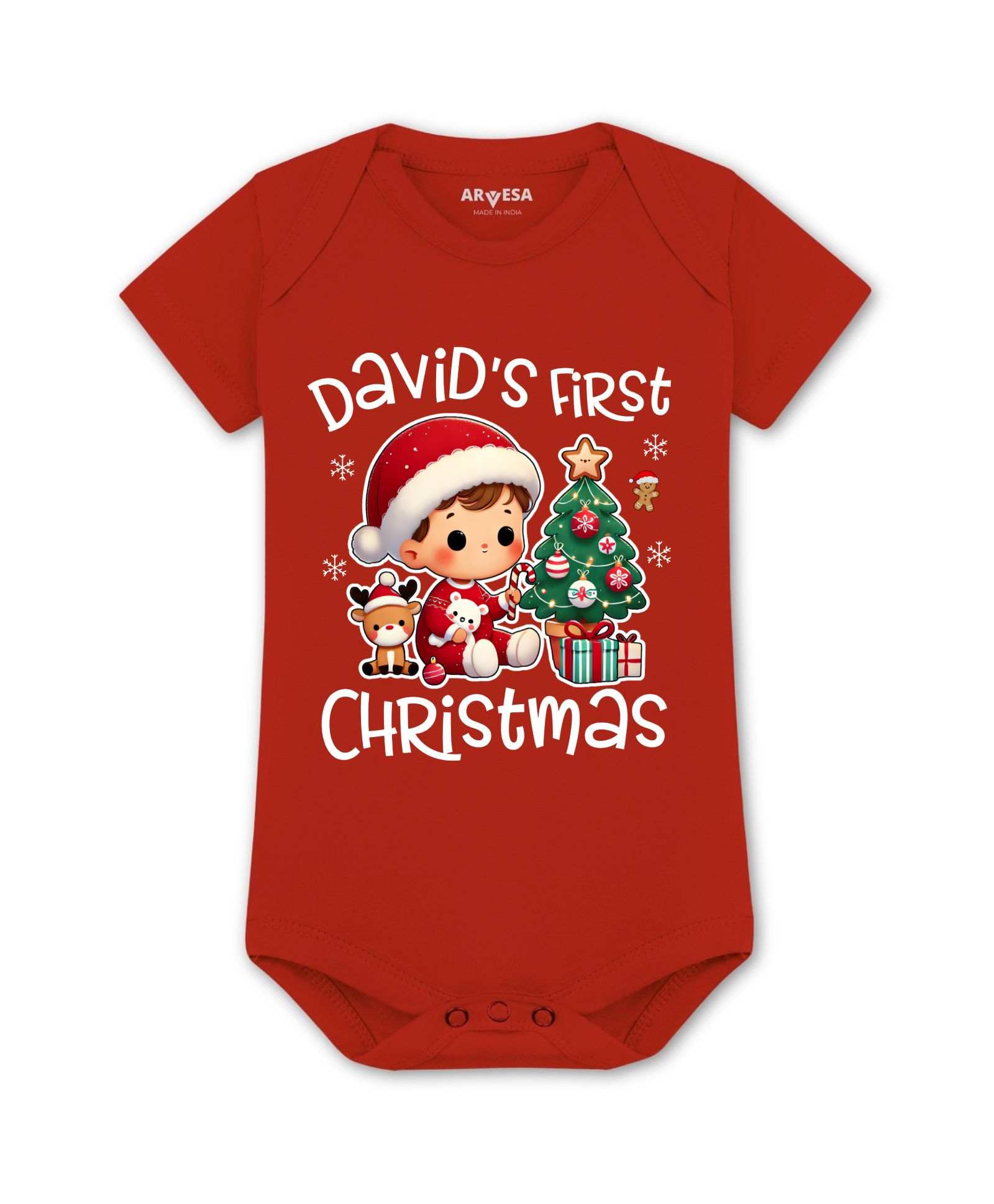
Once a baby starts crawling, the Christmas outfit that looked perfect on a bed suddenly has to do a lot more work. Knees hit the floor, tummies scoot across rugs, and small hands grab at anything within reach. A festive romper can still look lovely and feel comfortable, but the fit and the small details matter far more than they did when your baby was lying still for photos.
This guide covers what to check for a baby who is crawling: room to move, leg openings, closures, fabric and a few everyday safety points. It is general advice for healthy babies. If your baby has a skin condition, a hip or joint concern, or you are unsure about how an outfit fits, check with your paediatrician before you decide.
Why movement changes the fit
A baby who is lying still needs very little room. A crawling baby bends the hips and knees again and again, pulls the legs up under the body and sometimes sits back on the heels. A romper that feels roomy when your baby is lying flat can pinch at the thighs, ride up at the back or pull on the snaps once the baby starts moving. So the test is not how the outfit looks on a hanger. The test is how it behaves when your baby is bent, twisted and wriggling.
A simple way to check is to hold the outfit up to your baby while they lie on their back, then bend the knees up towards the chest and gently open the hips. If the fabric pulls tight across the seat or the legs lift the bottom of the romper up sharply, the fit is too snug for crawling. Many parents also find it helpful to compare the chest and length measurements on the size chart rather than going only by age.
Check the leg openings and the seat
Leg openings are where most crawling problems start. Look for openings that are wide enough to sit without digging into the thigh, and soft edges that do not roll or bunch when your baby bends. Lay the romper flat, then pull gently on the seat and the inner legs. You want the fabric to give a little without feeling stretched to its limit.
- Choose a loose, soft leg opening over a narrow one, especially for a baby who is pulling up on furniture.
- Check the seat (the back part of the bottom). If it looks tight when laid flat, size up rather than trusting the fabric to stretch.
- For romper styles with straps, make sure the straps stay on your baby's shoulders when you lift their arms and tug the outfit lightly.
- Avoid anything that bunches under the knees or in the crotch, since bunching can rub and make a baby fussy during a long party.
Closures: snaps, zips and buttons
Crawling babies pull at everything, and that includes their own clothes. Before you dress them, check that the crotch snaps close smoothly and sit flat, with no loose threads or sharp edges. Zips should have a guard at the bottom so a little hand or a bit of skin cannot get caught. Any button should be firmly sewn on, and you should check it again after every wash.
Loose ribbons, bows, tassels and sequins can also come off during crawling, so keep decorations flat and well attached. If you are unsure about a closure, our guide on checking buttons, snaps and zips on Christmas outfits before wrapping goes through the same checks in more detail.
Fabric for busy knees and warm rooms
A crawling baby rubs their knees, tummy and hands on the floor all day, so a soft and breathable fabric is a sensible choice for regular wear. Cotton is a common everyday fabric. Knitted and fleece outfits feel cosy on the skin, but they can also make an active baby warm very quickly, especially in a room full of guests and a heater or a lot of body heat.
A useful everyday check is to feel the back of your baby's neck or the chest under the outfit. If it feels hot or damp, remove a layer rather than adding another. You can read more about this in our guide on fleece and knit Christmas layers, which covers how to keep a baby warm without overheating them.
Knees, feet and what goes underneath
Many crawling babies do better with bare feet or grippy socks indoors. Long, slippery socks can slide off or bunch under the toes, and very stiff soles can make it harder for a baby to push off the floor. Footwear for a festive look should be checked for a soft sole and a secure fit at the ankle. If you are choosing booties or socks as well as the romper, our guide on Christmas booties, socks and footwear for crawling babies covers the options in more detail.
For nappies, a romper with a soft waistband and an easy-to-reach nappy area saves a lot of stress during the day. Make sure the nappy fits under the outfit without pressing against the snaps, and change your baby before the outfit gets wet or soiled.
Some Christmas rompers to look at
These are real products from our Christmas range. The notes below only repeat what the product titles say, so please open each product page on Amazon.in to check the fabric, the size chart and the current price before you buy.
- Baby Romper Set Christmas Theme for Baby Boy and Baby Girl Cotton Design No 2115: a cotton romper set with a Christmas theme for boys and girls.
- Baby Jumpsuit Set Christmas Theme for Baby Boy and Baby Girl Cotton Design No 1760: a cotton jumpsuit set with a Christmas theme. A jumpsuit covers the legs fully, so check the leg openings closely when your baby is crawling.
- My First Cutie-Mas Quotes Ultra-Soft Knitted Romper for Newborn Infant Baby Girl/Boy: a knitted romper with a festive quote. Knitted outfits can feel warm, so use the warmth checks above during a long party.
- My First Christmas Dress Outfit Romper For Newborn Baby Boy Baby Girl: a Christmas romper described as 100% cotton in its title, with a dress-style look.
Whichever you pick, check the seat, the leg openings and the closures using the steps above, and do not rely on the photo alone.
Safety points for a crawling baby at a Christmas gathering
Festive outfits are only one part of the picture. A crawling baby at a party is often on a floor with food, candles and small decorations within reach. Keep candles and battery decor out of reach, check that loose buttons or trims are not in the room, and keep an eye on your baby's clothes after a meal or a play session. Our guide on keeping babies safe among guests has more ideas for hosts and visitors.
FAQ
Can a crawling baby wear a romper with feet?
Yes, many parents use footed rompers for indoor crawling, but check the feet first. The feet should not be so long that they bunch under the toes, and the soles should give some grip if your baby is on a smooth floor. If you notice the feet slipping or the baby tripping, switch to a footless romper with socks or go barefoot indoors.
Should I buy a bigger size so my baby has room to crawl?
Not always. A size that is much too big can bunch at the knees and make crawling harder, and it can also slide and cover the face. A size that is too small restricts the hips and legs. The best test is the flat check and the bend check described above, and the size chart is a good starting point for comparing measurements.
How often should I check the outfit during a party?
Check it at every nap, feed, nappy change and play break. Look at the closures, the leg openings and the temperature of the chest and neck. If a snap has come loose or a seam has pulled, change the outfit before your baby crawls again.
Wrap up
A crawling baby needs an outfit that moves with them, so look at the seat, the leg openings and the closures before you decide. A little checking at home will make the festive day far more comfortable for your baby, and far less stressful for you.